
The Real 'Root of All Evil'
Why You Should Love Your Money

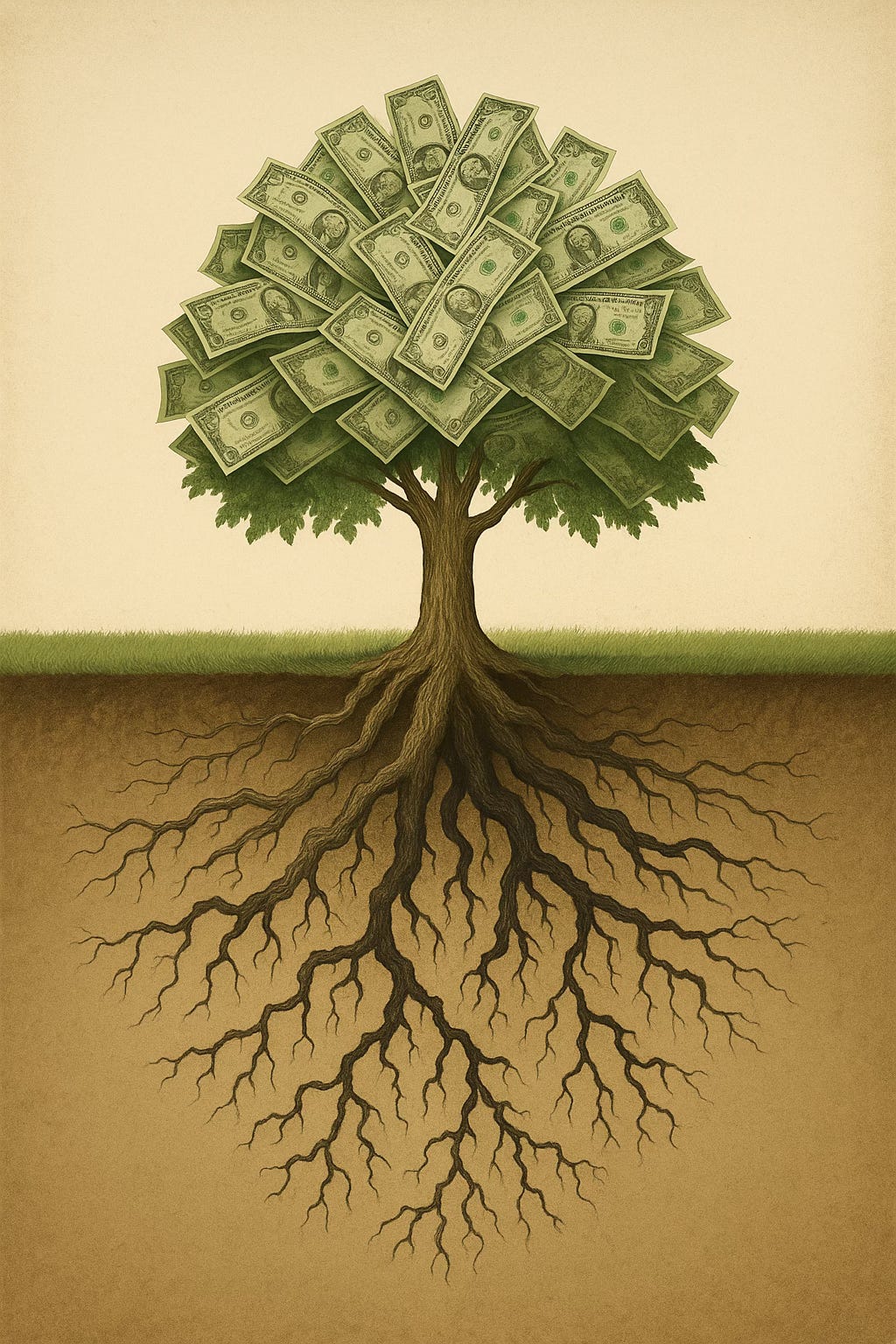
You’ve heard it said: “The love of money is the root of all evil.”
It’s repeated like gospel truth, usually by people who’ve been burned by it or feel guilty for wanting more.
But the truth is simpler: money itself isn’t evil. It’s a tool.
It can fund hospitals or buy yachts, cure disease or spread corruption. A hammer can build a home or smash a window; it depends on who’s holding it and what they intend to do.
The real root of financial evil isn’t loving money.
It’s abandoning responsibility for it.
The real moral failure is not love, but neglect.
My Dad’s Counterpoint
My dad used to say,
“No one loves your money more than you.”
The point isn’t to love money for its own sake, but to care enough to guide it wisely.
Too many people hand their life savings to strangers with fancy titles, letters after their names, or glossy brochures, hoping they know what they’re doing.
They outsource their future and call it “planning.”
That’s not stewardship. It’s surrender.
Financial advisors and other professionals can be invaluable when providing advice, creating estate plans and offering tax guidance.
But at the end of the day, they’re doing a job, and you’re one of many clients they serve. Their duty is professional. Yours is personal.
With that in mind, it’s up to you to manage your money and take ownership of your accounts.
It’s your life, your money, your future. Why entrust that to someone else?
How Evil Slips In
Bernie Madoff didn’t just fool his investors because he was clever. He fooled them because they didn’t ask questions. They saw the steady returns and thought, Finally, someone else can worry about it for me.
Enron’s shareholders believed the glowing earnings reports instead of reading the balance sheet.
In 2008, millions took out mortgages they couldn’t afford and trusted the system would sort it out.
FTX investors poured billions into a crypto mirage because everyone else was doing it, and due diligence felt old-fashioned.
Every one of these disasters had a common thread: abandonment of responsibility.
What Love Really Looks Like
To love your money the right way means to care about it: to understand it, to question it, and to give it purpose.
Money can fund generosity, freedom, innovation, and opportunity. It can secure your family’s future and make the world a better place. But only if you stay engaged.
Teach your kids that. Show them that loving money doesn’t mean worshipping it; it means taking ownership of it.
The Legacy You Build
Last month, we talked about Paul Newman, who saw money not as a temptation but as a tool. He didn’t worship or reject it; he used it to magnify his purpose.
My dad understood that same truth in his own way when he said, “No one loves your money more than you.”
He wasn’t glorifying greed. He was warning against apathy.
Money itself isn’t the root of all evil.
The real root of financial evil is indifference, the moment you stop caring enough to take responsibility for your own wealth.
Actionable Takeaway:
Pick one area of your finances this week that you’ve handed off—an investment, an account, or an advisor relationship—and dig into it. Ask questions until you understand it.
Because no one loves your money more than you.
Until next time,
Karl Kaufman
American Dream Investing
From First Trade to Family Fortune
P.S. Someday, someone you love will inherit not just your money but your money habits. Teach them what you wish someone had taught you.
Next week, we’ll talk about how to do that and how to start passing down not only wealth but wisdom.
great article